Wednesday, November 22, 2006

About The Bear's Liar

Here is a must-read essay: The Bear’s Lair: The dangerous games managements play

  • Then there was Enron. The sentences handed out to Enron’s top management made it appear that its collapse was due to thieving but in fact the thieving was minimal in the context of Enron’s overall size. The collapse resulted from sheer incompetence. Enron was running a huge energy trading operation from a company whose debt rating never exceeded BBB. Consequently, when the market turned against it, Enron’s counterparties quickly required additional collateral to be posted and the house of cards collapsed. Enron’s energy trading operation was perfectly viable, as has been demonstrated by its subsequent success within UBS, but was far too big for anyone but a major international bank.

    Unlike earlier derivatives catastrophes, Ford’s and Fannie Mae’s losses don’t relate to poor trading, but from the difficulty in valuing a large portfolio of derivatives in financial statements. Financial Accounting Standard 133, which deals with derivatives valuation, allows companies to divide derivatives positions between trading, in which positions are marked to market and profits and losses taken and hedging, in which they are held for the long term against the asset being hedged. Naturally, you’re supposed to decide immediately you buy the derivative which category it will go into. In the case of Fannie Mae, management had been holding new derivatives positions for several weeks to see which way the market went, and then recording them so as to book the profits and leave the losses as hedges, to accrue over the life of the instruments concerned.

    Needless to say, when this trick was discovered much later, after Fannie Mae management had collected several years of record bonuses, it was more or less impossible to determine what the correct position should have been – thus the accounting uncertainty and the two years of cleanup work.

    Derivatives are sold by investment banks to corporations seeking to hedge risks in interest rates, currencies, equities or commodities. To the banks selling them, who make trading profits through their knowledge of the deal flow, they’re a wonderful business. To corporate management, which can use them to create artificial profits in a quarter in which earnings are falling short of forecasts, they may also be attractive – any accounting restatements occur several years later, and pass almost unnoticed by the market. For example Sears, now owned by ex-trader Ed Lampert, announced Thursday that it made more money -- $101 million – from trading in credit derivatives in the third quarter of 2006 than it did from its core retailing business --$95 million.

    I’m sure Lampert feels very proud of himself, and will be given some suitably munificent reward. However Sears shareholders – and customers, and employees – will wonder what the hell is going on. Trading credit derivatives is a huge distraction from management’s primary purpose of running a retailing operation. Indeed, the market reflected this view, with Sears’ share price dropping 5.5% on the day

And for the shareholder or the investor, the following paragraph says it all.

  • To corporate shareholders derivatives are all risk and no reward. In addition to the risk of a rogue trader, the risk of a hedging system that proves flawed and the risk of overtrading, shareholders also suffer the risk of corporate management dressing up earnings. Further, whereas before the derivatives era shareholders in a company selling products in Germany knew they would have an exposure to the deutschemark/euro, and could judge the investment merits of that position, these days a company doing business in Germany may turned out to have exchanged that cash flow for floating rate Thai baht. At the end of the year, shareholders who read annual report footnotes carefully will discover their new baht exposure, but not before. Options make the position even more opaque. Given the agency problems between shareholders and management, and between management and traders, allowing companies to play the derivatives markets is a mug’s game for shareholders.

Remember the most important issue...

If the bet works out great, the management like in Fannie Mae's case, the maangement will take all the credit and most important, the BIG-FAT-OUT-THE-WORLD-BONUSES!!!

And what does the shareholder get?

And oh... if it fails.... what does the shareholder get?

Magnum and Its Cash

Blogged on this stock a couple of times. Past blog postings: magnum fall out of favour! , magnum again. , reminiscences of a stock mumbler: iv and About Magnum Again.

Today I noted an interesting comment from RHB Research, which commented that Magnum's subsidiary, "Magnum 4D had acquired 13.4m shares or 0.88% of Sarawak Enterprise Corporation (SEC - from 2 Jun 06 to 20 Nov 06) for RM16.6m or at an average price of RM1.235 per share."

As rightly pointed out by RHB, this investment "is a small investment outlay in view of Magnum’s net cash position of RM710m and Magnum 4D’s cash reserve of RM440m (no debt) as at Sep 06."

But...

Consider this issue. If you were an investor purchasing Magnum because of its net cash position in hope that you benefit from this cash factor, surely you would have been disappointed.

And the following are the concerns mentioned by RHB in their writeup.

  • . However, this move further raises concerns about its cash management policy and may undermine the recent positive developments (cancelling of treasury shares, higher dividend and sale of land in Sepang). Moreover, SEC is considered a related company given that Magnum’s parent, MPHB, has a 18% stake in the East Malaysia utility company.

    . Maintain Underperform. We remain wary about its opaque cash management policy as well as other non-operational risks and the higher luck factor risk. Fair value is pegged at RM1.90 or a 25% discount to SOP of RM2.53.

See the concerns raised?

Yes, the piggy bank cash is extremely healthy but one really does not know what the management will do with the cash.

OPAQUE CASH MANAGEMENT POLICY!!!!

Buying shares in another listed company is like dabling into the stock market. Do the management reckon that they are a Warren Buffett? Or a Bill Miller?

And worse of all... and in fact it really stinks that the fact Magnum’s parent, MPHB, has a 18% stake in SEC!!

Sigh!

Tuesday, November 21, 2006

More Disposal of Shares Seen in Crest Builder

Here's another update:

Director's Disclosure of Dealings in Securities pursuant to Chapter 14 of the Bursa Malaysia Securities Berhad ("Bursa Securities") Listing Requirements

Disposal of 2,687,700 shares.

Incredible!

If Crest Builder was half as good as what OSK tried to portray, why are these folks disposing their shares in Crest Builder like plague?

Why?

Housing, Upside Down Logic and Greatest Manager

Update on the housing: Home Sales Plummet in 38 States in 3Q.

  • The once-booming real estate market's persistent weakness over the past year has reined in expectations for economic growth but hasn't been severe enough to offset a rising stock market, lower gas prices and improved consumer expectations.

    The National Association of Realtors reported Monday that sales of existing homes fell in 38 states during the summer. Sales retreated to a seasonally adjusted annual rate of 6.27 million units nationwide, down by 12.7 percent from the same period a year ago. Nevada, Arizona, Florida and California led the declines.

    Home prices also dropped: The realtors' survey showed that the midpoint price for an existing home sold during the summer dipped 1.2 percent year over year to $224,900. Some 45 metropolitan areas saw home prices decline.
WSJ has a survey: http://online.wsj.com/article/SB116370236302025327.html?mod=home_whats_news_us

And another worthwhile reading article:
Is the Housing Bubble Collapsing? 10 Economic Indicators to Watch.

And did you read
Bill Fleckenstein's The upside-down logic of Wall Street?

And finally, here's a nice article on Bill Miller on Fortune:
The greatest money manager of our time

  • As it stands now, Miller has compiled one of the most remarkable records in the history of investing: His fund has outperformed the stock market for 15 straight years. That's right, 15 years, starting in 1991 - during George Bush the elder's presidency - through the tech bull market, then the crash and now the recovery
Here's a tip.

Think!!!

  • "What we are really trying to do is to think about thinking," Miller tells me. "Understanding how groups behave is central to understanding how complex adaptive systems - such as the stock market - work."
Cheers!

Crest Builder's Home Run?

Just as I updated my blog posting on Crest Builder ( Crest Builder - Fulfilling What Prophesies?? ), I realised that Crest Builder reported its earnings yesterday.

As mentioned in Crest Builder Again, Crest Builder had only made 9.322 million for its first 2 quarters of fy 2006. And for OSK to forecast its fy 2006 earnings to be at rm32.9 million, I find it totally astounding!

This was Crest Builder earnings: Quarterly rpt on consolidated results for the financial period ended 30/9/2006

Crest Builder announced its Q3 earnings was rm7.225 which was certainly much more than CB's Q2 net earnings of rm3.695 million.

But...

As good as its earnings was, it was never gonna be enough. Not when one projects such an astronomical set of earnings.

Hence, the OSK writer was forced to write in the following manner.

  • Astounding! CB’s 9M06 turnover and net profit grew significantly by 25.4% and 71.2% respectively (Fig. 1). Even after adjusting for the cessation of goodwill amortisation in accordance with FRS 3, CB would still register YTD net profit growth of 38.4%. Despite the much stronger 3Q06, annualised net profit came in at RM22m, still a far cry from our initial projection of RM32.9m. It managed to however, beat the market consensus by at least 10%.

A far cry from their projection of rm32.9 million!! And that projection is looking might silly ain't it?

  • Fine-tuning required. Despite the impressive set of results, CB is still lagging behind our initial projections. The Group only has 1Q left to register a further RM16.4m in net profit to hit our forecast! Much of this, as we foretold earlier, was the extremely slower work progress recognition during the 1H06. Hence, we are gladly fine-tuning our FY06 turnover and net profit projections from RM336m and RM32.9m to RM310.4m and RM26.8m respectively

LOL!!! So they forced themselves to 'fine-tune' their projections DOWN TO rm26.8 million.

Fine-tune.

What a nice set of words!!

And consider this. Current Crest Builder net profit is only rm16.547 million. So despite knowing that the group has only one reporting quarter left, OSK still CHOSE to SET A VERY OPTMISTIC projection of rm26.8 million!

Which means, they are saying Crest Builder will report at least rm10.253 million in earnings for its Q4 quarter.

Mighty optimistic again considering Crest Builder only earned rm7.225 for its Q3.

Now take a look at this.

  • Reiterating BUY with a refined 12-month target price of RM1.70. Based on the Group’s current share price of RM1.03 and forward fully diluted FY06 of 18.7sen and FY07 EPS of 30.5sen, the CB is currently trading at a forward PER of 5.5x and 3.4x in FY06 and FY07 respectively, a significant discount of 21.3% and 51.8% to its average peers’ PE of 7.0x. This is unjustifiable given CB’s strong and solid earnings prospects.

Guess what, a refined 12-month target price of RM1.70.

LOL!!!!

Refined!

Another choice word!

What happened to their TARGET PRICE of rm1.84 (see Crest Builder Again) set just on the 14 Nov 2006?

This was a HOME RUN stock, isn't it?!!

A home run stock which had its TP reduced from rm1.84 to 1.70?!!

A home run stock which is seeing a lot of SELLING (see Crest Builder - Fulfilling What Prophesies?? ) ??!!

A home run stock was promoted at 1.18, a day after the stock gained 13.5% the previous day!?

A home run stock which opened the day at 1.03, down 15 sen, after it's rosy write-up on the 14th Nov!?

How can?

Crest Builder - Fulfilling What Prophesies??

Blogged on this stock recently: Crest Builder Again and updated it here, Regarding Crest Builder Again. In the update, I mentioned the following:

  • Now I do understand that some times certain research reports tends to be overly optmistic but this incident regarding Crest Builder leaves a really bad taste, especially the manner in which the writer boasted that Crest Builder has risen some 24.2% to 1.18 in a space of just one month. Alas, how short his memory was for he too recommended the same exact stock back on 6th May when it was trading at 1.12. So if one purchased his recommendation back in May at 1.12, there is really nothing to shout about, is there?

    Anyway, isn't it strange that one of the shareholder had disposed some 2,507,000 shares in Crest Builder on the very same day that OSK released that same research report?

    Strange timing or what?

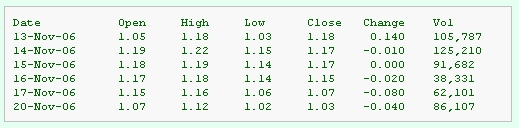
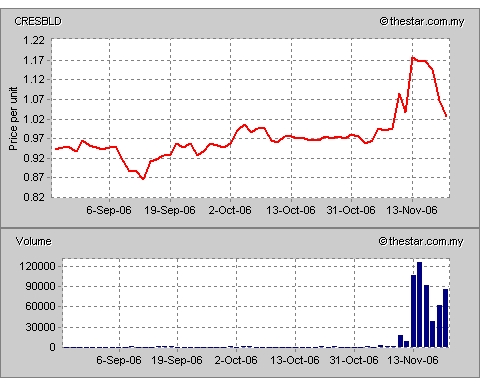
They say pictures say a thousand words.

The report from OSK was published on the 14th Nov.

See how Crest Builder gained 14 sen or 13.5% the day before OSK wrote that STRANGE write-up?

And the nice handy work is shown below!

And if that is not enough, how about these disposal of shares announced..

Changes in Sub. S-hldr's Int. (29B) - Yong Tiok Chin (disposed 20,000 at 1.16)

Changes in Director's Interest (S135) - Yong Soon Chow (disposed 460,000 at 1.168)

Changes in Sub. S-hldr's Int. (29B) - Yong Tiok Chin (disposed 2,273,000 at 1.163)

Changes in Sub. S-hldr's Int. (29B) - Yong Tiok Chin (disposed 2,507,000 at 1.194)

How Brown Cow?

Saturday, November 18, 2006

Compelling Reasons to Privatise Scomi

The Star Bizweek has an article on Scomi Group, To privatise or not? , in which it states the compelling reasons why Scomi Group should be privatised. ( Refer recent blog posting: Privatisation of Scomi? and Update on Scomi )

I find it rather strange the need for this article.

Really.

After all, if you look at the blog posting, Privatisation of Scomi? , you would note that the whole 'story' is based on nothing but speculation and of course the in famous 'according to sources'.

This was what printed by the Business Times article on November 15.

  • SPECULATION is rife that major shareholders of Scomi Group Bhd may take the integrated oil services firm private in a bid worth as much as RM1 billion.

    Sources said the main shareholders, who include the son of Prime Minister Datuk Seri Abdullah Ahmad Badawi, are considering this as an option as Scomi's market price does not reflect its true value.

SPECULATION is rife and SOURCES said.

Ever wonder why can't our financial report news based on facts and nothing but facts?

Do you want to read news based on SOURCES?

Let me repeat a thousand times again. Anyone can be a source. Anyone. You, me, the makcik or the Ah So cleaning the toilet. The driver. The office boy. They all can be a source.

So today we have an article posted in The Star Bizweek which ATTEMPTS to JUSTIFY this speculation. And they even have TA Securities head airing out his compelling reasons to privatise the stock.

  • First off, the timing is right. TA Securities' head Kaladher Govindan is just one of those many who perceive Scomi as being undervalued.

    “Going by current prices, it's advisable to take it private,” he says, pointing out that the company is ripe with future growth potential, as evinced by such developments as its recent penetration of the US market. Indeed, Scomi has gone on record as stating that it expects to more than triple its sales to US$1bil by 2009.

    The upshot of this is that keeping Scomi listed would mean sharing those future profits with the public. Conversely, privatising the company would largely benefit its major shareholders.

    Such a move would also provide the company with a greater deal of flexibility by removing the need to keep up with the regulatory framework, in addition to obtaining shareholders' approval for certain decisions.

    Second, Scomi is now susceptible to what is known as holding company discount. Buying into a conglomerate that has a number of subsidiaries engaged in diverse activities under their umbrella is often a bit of a mixed bag, as investors may not want to be exposed to each of these individual companies.

    In this instance, especially when a holding company has successfully listed a number of its subsidiaries, buying directly into a subsidiary may represent a better way to get direct exposure. From the perspective of the company itself, analysts feel there is sufficient reason to de-list Scomi as funding for expansion can be raised at the subsidiary company level.

    To illustrate the former point, Scomi Engineering Bhd was trading almost 50% higher than its parent two weeks ago. Even after the recent uptrend in Scomi's price, following the recent spate of news, it is still trading 25% lower than its subsidiary.

    Financials and elephants

    Third, Scomi can afford it. The company's announcement some months ago that it would undertake a restructuring exercise to streamline its subsidiaries was viewed favourably by analysts, along with the proposed listing of KMC Oiltools Bermuda Ltd on the Singapore Stock Exchange under the name Scomi Oilfields Ltd (Oilfields).

    With the exercise expected to raise up to half a billion ringgit for Scomi, a privatisation exercise was among the many methods mooted to prevent the cash burning a hole in Scomi's deepened pockets.

    As major shareholders, Datuk Kamaludin Abdullah and CEO Shah Hakim Zain own about 34.7% of the company between them. TA Securities reckons they would have to cough out between RM787mil and RM984mil based on the speculated price range of between RM1.20 and RM1.50.

    “We believe the major shareholders could obtain part of the funding from the group’s possible capital repayment exercise with the listing of Oilfield Services on the Singapore exchange that could raise up to RM700mil (inclusive of the RM130mil from settlement of inter-company loans),” says the house.


How?

Let's take a look at Scomi Group again.

Here is the link to their last reported quarterly earnings:

Quarterly rpt on consolidated results for the financial period ended 30/6/2006

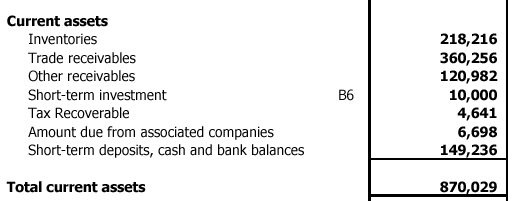
let's look at the balance sheet. It's current assets.


And the below is their group borrowings.

Well, group loans totals 1.053 BILLION. Groups piggy bank cash is only 149.236 million, which gives one a nett debt of ONLY 903. 946 million.

My simple question again.. once Scomi Group is privatised, who owns this debt?

Update on US Home Markets

Saw this article on MSN.

Hard landing for the housing market

  • Housing starts tumbled in October, the government said Friday, falling to levels not seen since July 2000....

    Housing dive is a shocker
    The government said starts fell to a seasonally adjusted annual pace of 1.49 million new homes, down 14.6% from September and 27.4% from October 2005.

    Bloated inventories and weakening home sales contributed to the drop. Economists had been looking for a 5.6% fall to a 1.67 million annual rate.

    Home-building permits fell for the ninth month in a row, dropping more than 6% to the lowest pace since December 1997. The drop in permits, which are often a measure of builder confidence in the real estate market, is a signal that housing starts could continue to fall -- and a sign that the slump isn't over yet.

    "This is a shocking number," Phillip Neuhart, an economist at Wachovia, told Bloomberg News. "The market is going to remain weak well into next year."

    Other economists said the decline was not such terrible news. "The faster builders address their bloated inventories and bring the pace of home construction down, the quicker the housing correction will play out and the economy can return to a more normal footing," Stephen Stanley, the chief economist for RBS Greenwich Capital, told MarketWatch.com.

    The sharp slowdown in housing this year stands in stark contrast to the past five years, when the lowest mortgage rates in four decades powered a housing boom that pushed sales of both new and existing homes to five consecutive records.

And on the FSO write-up, Michael Hartman has the following remarks. ( Housing Numbers, Inflation & Interest Rates, Options Expiration and Gold )

  • Though the rate of construction has declined, the big problem is a rising inventory of homes for sale as actual sales decline. New home sales are expected to fall to 1.06 million units this year from an all-time high of 1.28 million units in 2005. Notice the discrepancy in the number of homes being built on an annualized basis at 1.5 million units versus the expected sales of 1.1 million units.

    Supply and demand dictate that prices should continue to move lower. Eric Green, Chief Market Economist at Countrywide Financial made it clear by saying, “Inventories of unsold homes are off the charts.” Robert Toll, CEO of Toll Brothers said revenue for the current quarter is down 10%, but more alarming is the fact that their orders are down by more than 50% from the same period a year ago. According to a Bloomberg article today, Mr. Toll said in a conference call on November 7th that there are no signs that the U.S. housing market will recover soon. I have spoken with three mortgage bankers in the last week that I know personally. In candid conversations, they are saying it doesn’t look good, and all three expect foreclosures to increase next year. Increasing foreclosures will only add more inventories to unsold homes. In the minutes of the Federal Reserve meeting from October 24-25, the Fed-speak language uses the wording, “Further adjustment in the housing market appear likely.”

    Rather than continue beating a dead horse with more quotes and data on the weak housing numbers, if you care to look into more detail from a bigger-picture perspective, please see Chris Puplava’s Wrap-up posted two days ago. Chris went into great detail with economic charts covering the last 20-30 years, with some of the data going back to the Fifties. Looking at the longer-term picture,
    it does appear we have a long way to go to absorb the massive run-ups in residential real estate over the last few years.